
01037567890
| Country | Rejection Rate | Main Reason |
|---|---|---|
 United States
|
35-50% | Poor interview + weak ties |
 United Kingdom
|
25-40% | Weak Genuine Visitor Intent |
 Canada
|
20-30% | Financial proof + Egypt ties |
 Australia
|
15-25% | Health exam + bank accounts |
 Germany (Schengen)
|
15-30% | Unclear travel program |
 France (Schengen)
|
20-35% | Missing docs + weak financials |
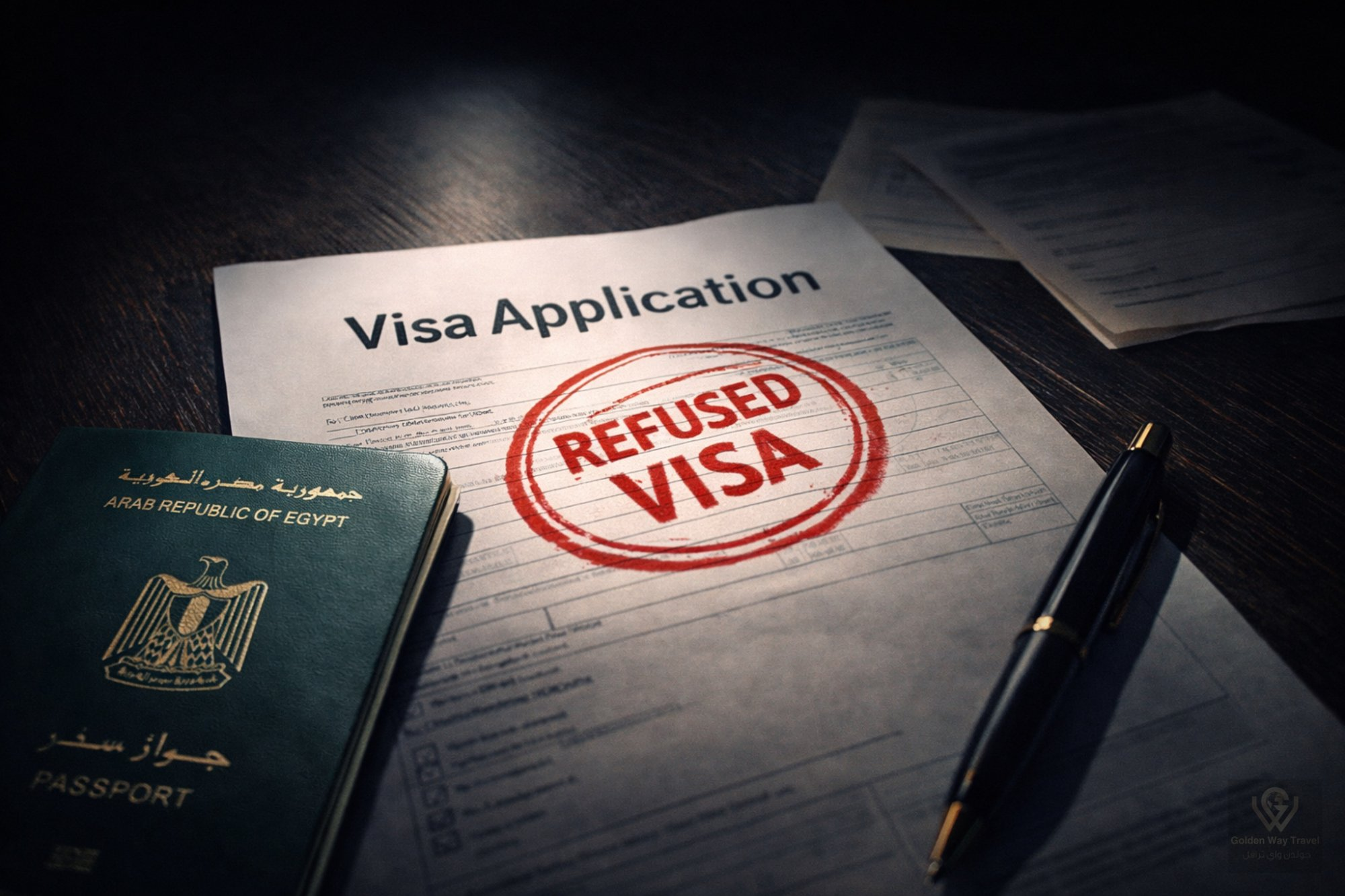
Each country has a different rejection rate and different main reason. Here’s a quick look at the reality for
the Egyptian traveler:
Now that you know the requirements, here are the practical steps to successfully submit your application:
Start preparation at least 6 months in advance: prepare your bank account, organize your documents, plan your visit program precisely. Early preparation = strong file.
Choose the right embassy precisely: don't apply to a country because "it's easier". Apply from the embassy of the country where you'll spend the longest time. This is a non-negotiable rule.
Request certified translation for every Arabic document: from a trusted translation office with an official stamp. Don't underestimate this point — untranslated document = immediate rejection.
Prepare an organized and tidy file: use an index, divide documents into sections, add a Cover Letter explaining your application. An organized file leaves a strong impression.
Buy travel insurance with correct specifications: 30,000+ EUR for Schengen, 50,000+ USD for other countries. Verify it covers the entire area and period.
Practice the interview (for USA visa especially): review expected questions, memorize your plan details, consult those who've experienced the interview. Confidence comes from preparation.
Consult an expert before applying: even if you feel your file is strong. The expert's eye sees what you can't. This step may save you from losing visa fees.
Don't give up or rush: take 1-2 weeks to calm down. Rushed decisions after rejection lead to more rejections.
Get the official rejection letter: the embassy gives you a letter stating the reason (sometimes vague). Keep it well — it's your key to future success.
Analyze the reason precisely: search for the real meaning behind every phrase in the letter. Embassies use general language, but behind it are specific reasons.
Consult a specialized expert: to analyze the rejection and determine what needs improvement. Consultation at this stage is an important investment.
Address the problem at its root: if the reason was financial, improve your balance for months before reapplying. If the reason was documentation, complete the deficiency.
Reapply at the right time: don't rush to reapply within weeks — this raises suspicions. Wait at least 2-3 months after addressing the reason.
Submit a stronger file than the first: add new documents, a clarifying letter explaining how you addressed previous rejection reasons. Reflect maturity and professionalism.
UK visa cost is higher than Schengen visa, but offers unique speed options for those in a hurry. Here are
the real costs:
= "You didn't prove you'll return to your country". Real reason: weak ties to Egypt.
= "Your funds are insufficient for the trip". Real reason: insufficient or unstable bank balance.
= "Your visit purpose is unclear". Real reason: contradictory or illogical travel program.
= "We doubt your intentions". Real reason: contradictory interview answers or suspicious information in the file.
= "Your information is not credible". Real reason: embassy doubts the authenticity of your documents or information.
= comprehensive rejection due to failure to prove ties to home country. The most common reason for US visa rejection.
Not everyone needs an expert to prepare their visa. But in certain cases, hiring an expert isn’t a luxury —
it’s a necessity to avoid losing time and money: